Many new photographers feel overwhelmed by endless camera options and technical jargon. They often buy a high‑end model only to discover it is too complex, heavy, or pricey for everyday use. This frustration can stall learning and waste money.
Choosing the best canon digital camera for beginners means finding a balance of ease‑of‑use, image quality, and future growth. In this guide you’ll learn how to compare key specs, match features to your style. Avoid common pitfalls so you can start shooting great photos right away.
[
[EZ_UI_BLOCK_0]
]
📌 AT A GLANCE
- ✓Ease of Use: Look for intuitive menus and guided modes that help you learn quickly.
- ✓Image Quality: Focus on sensor size and ISO power for clear, low‑light shots.
- ✓Lens Flexibility: Choose a system with low-cost, handy lenses for growth.
- ✓Budget Balance: Aim for a camera that offers value without hidden upgrade costs.
- ✓Future Proofing: Ensure the body supports newer firmware and accessories.
Essential Guide to Best Canon Digital Camera for Beginners: Key Insights
Applying these proven insights on best canon digital camera for beginners helps you avoid costly mistakes. Getting the right starter camera sets the tone for your photography journey. A well‑chosen body lets you focus on composition instead of fighting the controls. It also protects your budget by avoiding early upgrades.
[
[EZ_UI_BLOCK_1]
]
Understanding the basics—sensor size, autofocus system, and lens ecosystem—helps you compare models objectively. This knowledge turns a confusing shopping use into a clear decision process. For complementary picks and expert testing advice, see our guide on Best Digital Slr Camera for Beginners for Beginners.
- Sensor Size: Larger sensors capture more light, yielding better low‑light power and dynamic range.
- Autofocus Coverage: Wide AF coverage ensures fast focus on subjects across the frame.
- Guided Modes: Built‑in tutorials and scene modes help beginners learn without external help.
- Lens Ecosystem: A wide selection of low-cost lenses lets you grow your skill set.
- Ergonomic Design: Easy grips and simple button layout reduce learning fatigue.
Step‑by‑step, check each item on the list when you hold a camera. Feel the grip. Press the menu button. Look at the sensor size on the spec sheet. Write down your impressions. This simple checklist turns a vague feeling into concrete data.
By focusing on these fundamentals, you can quickly narrow down the field to cameras that truly fit a beginner’s needs.
Top Beginner Models Compared
Canon offers several entry‑level mirrorless and DSLR options that blend simplicity with power. Below we compare three popular models, highlighting their strengths for newcomers.
Track your baseline results before making changes so you can measure progress and spot improvements right away.
[
[EZ_UI_BLOCK_3]
]
[
[EZ_UI_BLOCK_2]
]
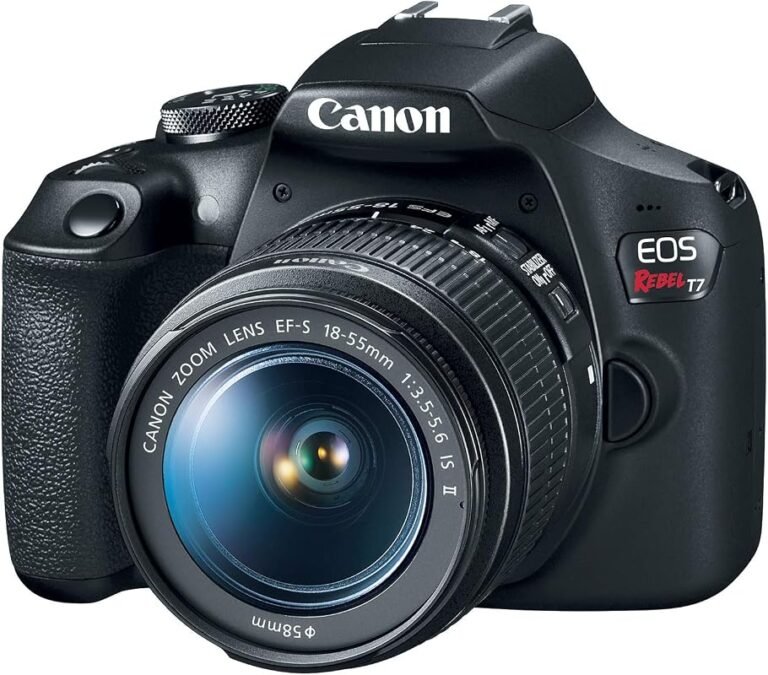
- Rebel T8i: Classic DSLR feel with an optical viewfinder. Great for those who love a traditional shooting use.
- M50 Mark II: Compact mirrorless body. Excellent for vlogging and travel thanks to its flip‑out screen.
- EOS R10: Modern mirrorless with high‑speed autofocus; ideal for sports and wildlife beginners.
Each model offers a blend of ease‑of‑use and room to grow. Your choice depends on personal handling preference. The type of photography you plan to pursue.
When buying a kit, focus on a versatile zoom lens (e.g., 15‑45mm) over a prime lens. It covers most everyday scenes and lets you experiment without swapping glass.
Understanding Sensor Size and Image Quality
Sensor size directly impacts how much light the camera can gather. Larger sensors produce cleaner images at high ISO. This is crucial for indoor or evening shoots.
For beginners, an APS‑C sensor strikes a good balance between cost, size, and power. Full‑frame bodies are excellent but often exceed the budget of a first camera.
- Light Gathering: Bigger sensors capture more photons, reducing noise in low‑light conditions.
- Depth of Field: Larger sensors provide smoother background blur, useful for portrait work.
- Crop Factor: APS‑C sensors multiply focal length by 1.6×, affecting lens reach.
- Cost Efficiency: APS‑C models give near‑pro image quality at a lower price point.
Practical tip: Shoot the same scene at ISO 800 with a T8i and an R10. Compare noise levels. You will see the larger sensor wins.
Choosing an APS‑C camera like the EOS R10 gives you high‑quality results while staying low-cost.
Autofocus Systems That Grow with You
Fast and accurate autofocus (AF) helps you capture sharp images, most when subjects move. Modern Canon mirrorless cameras feature Dual Pixel CMOS AF, which offers smooth focus transitions.
Beginners benefit from face‑detect and eye‑detect modes that lock focus on its own. This lets you to concentrate on framing.
- Dual Pixel AF: Provides phase‑detect accuracy across most of the frame for steady focus.
- Eye‑Detect Tracking: Keeps eyes sharp in portrait shots, even if the subject moves.
- Low‑Light Sensitivity: AF works down to –6 EV, useful for indoor events.
- Custom AF Zones: Simple point selection lets you learn precise focusing techniques.
Step‑by‑step, enable eye‑detect in the menu. Point the camera at a person’s face. Watch the focus box lock onto the eyes. Press the shutter. You now have a sharp portrait without manual tweaking.
These features make the EOS M50 Mark II. EOS R10 most friendly for newcomers learning to trust their camera’s focus.
Avoid relying solely on auto‑focus in very low‑light scenes. Switch to manual focus or add a light source to ensure sharpness.
Lens Choices and Compatibility
Canon’s lens lineup includes low-cost kit lenses, compact primes, and high‑end zooms. For beginners, a handy zoom lens (e.g., 15‑45mm) covers wide landscapes and moderate telephoto needs. For complementary picks and expert testing advice, see our guide on Top 10 Best Canon Camera for Videography for Beginners.
Consider future growth: a camera with a robust mount system lets you add specialty lenses without buying a new body.
- Kit Zoom Lens: Offers a flexible focal range for most everyday shooting.
- Prime Lens 50mm: Provides excellent sharpness and low‑light power for portraits.
- Macro Lens: Enables close‑up detail work, expanding creative possibilities.
- Telephoto Zoom: Ideal for wildlife or sports once you master basics.
- Mount Compatibility: Ensure the body supports both EF‑M and RF lenses for long‑term flexibility.
Real‑world example: Start with a 15‑45mm kit lens. After a month, buy a 50mm prime for portrait practice. You will notice sharper backgrounds and smoother bokeh.
Starting with a kit zoom. Adding a 50mm prime later creates a solid foundation for varied photography styles.
Essential Camera Settings for Beginners
Learning a few core settings empowers you to move beyond auto mode while keeping control simple. Start with aperture priority (Av) to manage depth of field. ISO auto to handle lighting changes.
These modes let the camera handle shutter speed. So you can focus on composition and exposure.
- Aperture Priority (Av): Choose the f‑stop; the camera selects shutter speed for correct exposure.
- ISO Auto: Keeps image brightness steady across changing light.
- White Balance Presets: Match indoor, daylight, or cloudy lighting without manual tweaks.
- Exposure Compensation: Adjust brightness when the camera under‑ or over‑exposes.
- Focus Points Selection: Use single‑point AF to learn precise focusing.
Step‑by‑step: Switch to Av mode. Set f/5.6 for a balanced depth of field. Let the camera choose shutter speed. Review the result. Adjust f‑stop up or down to see how background blur changes.
Practice these settings on familiar scenes to build confidence before exploring full manual control.
Maintenance and Care for Longevity
Keeping your camera clean extends its life and preserves image quality. Dust on the sensor or lens can cause spots in photos. Neglecting the battery can shorten its lifespan.
Regular upkeep also protects your investment, ensuring the camera stays steady for years.
- Sensor Cleaning: Use a blower brush and sensor swab only when spots appear.
- Lens Wipe: Apply a microfiber cloth with lens cleaner to remove fingerprints.
- Battery Care: Store batteries at 50% charge if not used for long periods.
- Firmware Updates: Install Canon’s latest firmware for power and bug fixes.
- Protective Cover: Use a camera bag and lens caps to shield from dust and impacts.
Practical routine: After each shoot, wipe the lens, store the camera in its bag. Check the battery level. Once a month, run a sensor check with a bright sky background. For complementary picks and expert testing advice, see our guide on Top 3 Best Beginner Canon Camera.
Following these simple steps keeps your starter camera in top condition, ready for any shoot.
Best Practices for Shooting Success
Good habits early on make a big difference. Use a tripod for steady shots, most in low light. Experiment with composition rules like the rule of thirds.
[
[EZ_UI_BLOCK_4]
]
Regularly review your images on a computer to spot areas for improvement. Don’t be afraid to try new settings.
- Use Tripod: Stabilizes camera for sharp images in low‑light or long exposures.
- Rule of Thirds: Place subjects off‑center for balanced, engaging photos.
- Check Histogram: Ensures proper exposure and avoids blown highlights.
- Shoot RAW: Retains full image data for flexible post‑processing.
- Practice Daily: Steady shooting builds skill faster than occasional sessions.
Example: Take a 30‑second walk with your M50 Mark II. Snap one photo every 10 seconds. Review them later. Notice patterns in focus, exposure, and composition. Adjust your technique each time.
These practices turn technical knowledge into always better photographs.
Choosing the Right Accessories for Beginners
Accessories can amplify your learning curve without breaking your budget. Start with three essentials: a fast memory card, a sturdy bag, and a spare battery.
Always check local guidelines and top specs before changing your regular routine.
- Memory Card: Choose UHS‑I U3 or UHS‑II for smooth 4K video on the M50 Mark II.
- Camera Bag: Look for padded compartments and a rain cover.
- Spare Battery: A second LP‑E17 (for T8i) or LP‑E17 (for M50) lets you shoot twice as long.
- External Mic: Improves audio on vlogs. The Rode VideoMic Pro works well with the M50 Mark II.
- Quick Release Plate: Makes tripod mounting faster and more secure.
Step‑by‑step, insert the memory card, format it in the camera, and label it “Primary”. Pack the bag with the camera, lens, charger, and cleaning cloth. You are ready for any shoot.
List the types of photos you want—portraits, landscapes, or action—to guide feature priorities.
Decide a maximum spend, including a starter lens and accessories.
Choose between APS‑C and full‑frame based on light needs and price.
Hold each model in hand to feel grip comfort and button placement.
| Model | Sensor | Megapixels | Key Feature | Approx. Price (USD) |
|---|---|---|---|---|
| Canon EOS Rebel T8i (DSLR) | APS‑C | 24.1 MP | Guided shooting modes | $749 (body only) |
| Canon EOS M50 Mark II (Mirrorless) | APS‑C | 24.1 MP | Vari‑Angle touchscreen | $599 (kit) |
| Canon EOS R10 (Mirrorless) | APS‑C | 24.2 MP | Fast 15‑fps burst | $799 (kit) |
Frequently Asked Questions
What Is the Biggest Advantage of a Mirrorless Camera for Beginners?
Mirrorless bodies are lighter, have electronic viewfinders that show exposure in real time. Often include advanced autofocus features that help new shooters capture sharp images quickly.
Do I Need a Full‑Frame Camera as a Beginner?
No. APS‑C cameras provide excellent image quality, lower cost, and smaller lenses. This makes them ideal for learning without the higher price of full‑frame bodies.
How Important Is a Kit Lens Versus Buying a Prime Lens First?
A kit zoom lens offers flexibility across many scenes. A prime lens gives better low‑light power. Starting with a kit lens is practical. Add a prime later for creative depth of field.
Can I Use Older Ef Lenses on the New Eos R10?
Yes. With Canon’s EF‑EF R adapter, you can mount legacy EF lenses on the R10, preserving your existing glass collection.
What Accessories Should I Buy First?
Invest in a good memory card (UHS‑I or UHS‑II), a protective camera bag, a spare battery. A basic cleaning kit. These items keep you shooting smoothly from day one.
Final Thoughts and Next Steps
Choosing the best canon digital camera for beginners is about matching ease of use, image quality. Growth potential to your personal style. Start with an APS‑C model like the EOS M50 Mark II or EOS R10, pair it with a handy kit lens. Practice the core settings outlined above.
As you grow, expand your kit with specialty lenses, explore manual mode. Keep your gear clean. With the right foundation, your photography will improve rapidly. You’ll enjoy the creative freedom that a well‑chosen Canon camera offers.